


The ONE Biggest Lawn Care Mistake Calgary Homeowners Make
You know that sense of accomplishment when you’ve just finished mowing the lawn and think, “Perfect. Now I won’t have to cut it again for a while.”
The grass is short. Everything looks tidy. Clean edges. Very golf-course-like feel.
Unfortunately, your lawn absolutely hates this plan.
For lawn care in Calgary, cutting grass too short is probably the single most damaging habit homeowners can repeat all summer long.
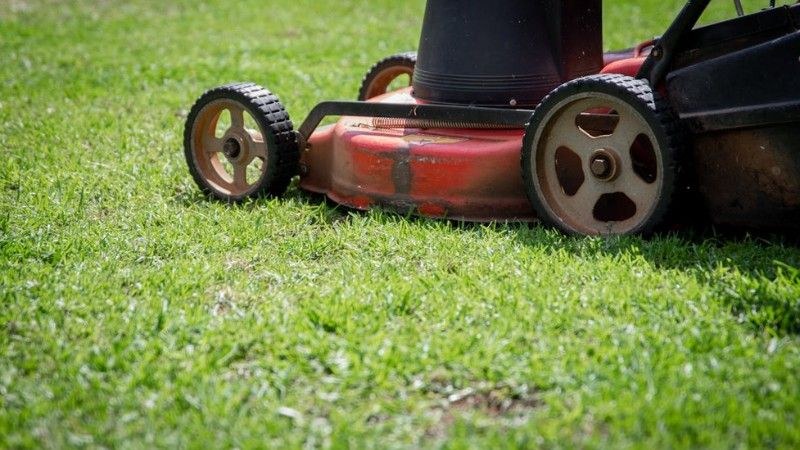
Let’s talk about why this happens, and why mowing height matters far more than most people realize.
Why Cutting the Lawn Short Is Especially Harmful in Calgary
Calgary lawns already operate under constant moisture issues because of the city’s dry climate. Between low humidity, wind exposure, strong sun, and Chinook conditions, moisture disappears quickly here. We also get lots of sunny days, so there’s that.
Longer grass actually helps protect the lawn from those conditions.
When turf is kept slightly taller, the grass blades:
- shade the soil
- reduce evaporation
- protect the crown of the plant
- help retain moisture near the roots
But when the lawn gets cut too short, all of that protection disappears. Suddenly, the soil heats up faster, moisture evaporates more quickly, roots experience more stress, and the lawn struggles to regulate itself properly.
That’s why scalped lawns often look fine for a few days… and then suddenly start fading once heat and dry conditions hit.
The grass simply loses its ability to withstand Calgary’s environment.
What Actually Happens When You Cut Grass Too Short
Grass blades aren’t just there for appearance. They’re the lawn’s energy system.
When you remove too much height at once, the plant suddenly loses a huge portion of its leaf surface, which means it loses a major part of its ability to produce energy through photosynthesis.
The lawn immediately shifts into recovery mode, where instead of strengthening roots or growing thicker, it starts using stored energy just to survive the cut.
That creates a chain reaction:
- Roots become weaker and shallower because the plant has less energy available, and root growth slows down significantly. Shallower roots make the lawn far more vulnerable to Calgary’s dry conditions.
- Moisture stress increases much faster. Shorter grass exposes the soil directly to sun and wind, accelerating evaporation and causing the lawn to dry out more quickly between waterings.
- Recovery slows during periods of heat. Instead of actively growing and thickening, the lawn spends much of summer trying to recover from repeated stress.
- Turf density begins to thin. Weaker growth creates small gaps throughout the lawn, especially in high-traffic or sunny areas where stress is already highest.
- Soil temperatures rise more quickly. Without taller grass shading the surface, the root zone heats up faster during hot afternoons, adding even more pressure to the lawn.
- Watering becomes less effective over time as weakened roots struggle to absorb moisture efficiently, which is why some lawns continue looking stressed even after regular watering.
Once that thinning starts, other problems move in quickly.
Brown patches become more common. Dry spots expand faster. Weak areas struggle to fill back in evenly. And because the root system weakens too, even watering becomes less effective over time.
Short Grass Creates the Perfect Conditions for Weeds
This is one of the biggest reasons scalped lawns become frustrating later in summer.
Healthy, dense turf naturally competes against weeds by crowding them out. Thick grass limits:
- sunlight reaching the soil
- open space for germination
- access to moisture and nutrients
But short, weakened turf loses that advantage quickly.
When grass is cut too low:
- more sunlight reaches the soil surface
- open patches develop faster
- stressed grass struggles to compete
That creates ideal conditions for weeds like dandelions, crabgrass, and clover. And once weeds establish themselves, they create even more competition for the already stressed lawn.
Why Scalped Lawns Struggle So Much in Summer
Summer is where the damage really shows up.
By July and August, Calgary lawns are already dealing with heat stress, rapid evaporation, inconsistent rainfall, and watering restrictions in some areas.
A healthy lawn can usually tolerate those conditions reasonably well. But a scalped lawn can’t.
That’s because short grass has very little margin for stress. Moisture disappears faster, roots remain shallow, and the lawn spends most of the season trying to recover instead of actively growing.
You’ll often notice:
- uneven browning
- thin patches near sidewalks and driveways
- dry areas that don’t respond evenly to watering
- sections fading faster than the rest of the lawn
At that point, homeowners make the logical conclusion that the lawn simply needs more water. But extra watering can’t fully compensate for weakened root systems and constant heat exposure at the soil surface.
The Right Mowing Height for Calgary Lawns
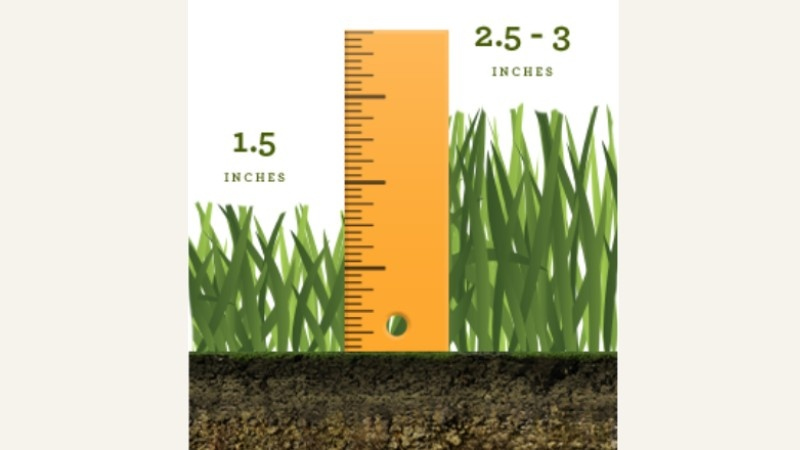
For most Calgary lawns, the ideal mowing height is around 2.5 to 3 inches.
That height gives the lawn enough leaf surface to:
- support stronger root development
- retain moisture more effectively
- protect the soil from excessive heat
- recover more evenly after mowing
It also helps create more stable turf during hot summer stretches.
A slightly taller lawn may not look as sharply trimmed on day one, but it usually looks healthier and more consistent over the course of the season.
Another important habit is avoiding aggressive cuts all at once.
A good rule is to never remove more than roughly one-third of the grass blade height during a single mowing. Removing too much at once shocks the lawn and increases recovery stress significantly.
Mowing Too Short Usually Creates Other Problems Too
Once the lawn is weakened from scalping, smaller maintenance mistakes become much more damaging.
Things the lawn might normally tolerate suddenly create bigger stress responses.
For example:
- Shallow watering dries out much faster. When roots stay close to the surface, they become heavily dependent on frequent moisture. In Calgary’s dry climate, that surface moisture disappears quickly through evaporation.
- Dull mower blades tear already stressed grass instead of cutting it cleanly. Those ragged blade tips lose moisture faster and create additional stress during hot weather.
- Mowing during peak afternoon heat increases moisture loss immediately after cutting. The lawn is already vulnerable after mowing, and intense sun exposure can accelerate dehydration.
- Cutting too much height at once further shocks recovery. Removing large portions of the blade forces the grass to redirect energy toward survival rather than root development and density.
- Thin turf becomes much more vulnerable to weeds. Open soil receives more sunlight, making it easier for dandelions, crabgrass, and clover to establish quickly.
- Compacted soil becomes more noticeable in stressed lawns. Weaker root systems struggle even more when water and oxygen can’t move properly through the soil.
Healthy lawns can usually handle occasional mistakes. But stressed lawns don’t recover nearly as easily.
That’s why mowing height affects so much more than appearance.
Sometimes the Best Thing You Can Do Is Cut Less
A lot of Calgary lawn problems are caused by stress, some environmental, and some man-made. And the fastest way we create that stress is by cutting the lawn too short too often.
The good news is that this is also one of the easiest problems to correct. When mowing height is increased, the lawn usually becomes more drought-resistant, denser, healthier, and less vulnerable to weeds.
At Green Drop, we focus on supporting overall lawn health through proper fertilization, overseeding, weed control, and soil improvement strategies designed specifically for Calgary’s climate.
Book your lawn care package today and give your lawn the support it actually needs to thrive.