


Common Lawn Problems in Calgary (And Why They Happen)
Reading time: 6 - minutesCalgary lawns have a bit of a reputation. You may have the greenest thumb in the neighbourhood, yet somehow, come summer, your yard will turn around and say, “Yeah… I’m going to go brown anyway.”
The thing is: Between dry air, strong sun, and those classic Calgary weather swings, your lawn is dealing with more behind the scenes than you realize. And that’s why the usual fixes don’t always fix anything.
So if your lawn feels a little uncooperative, it’s not being difficult; it’s just reacting to conditions.
Let’s speak with our Calgary lawn care experts and dig into what’s actually happening.
1. Calgary’s Dry Climate
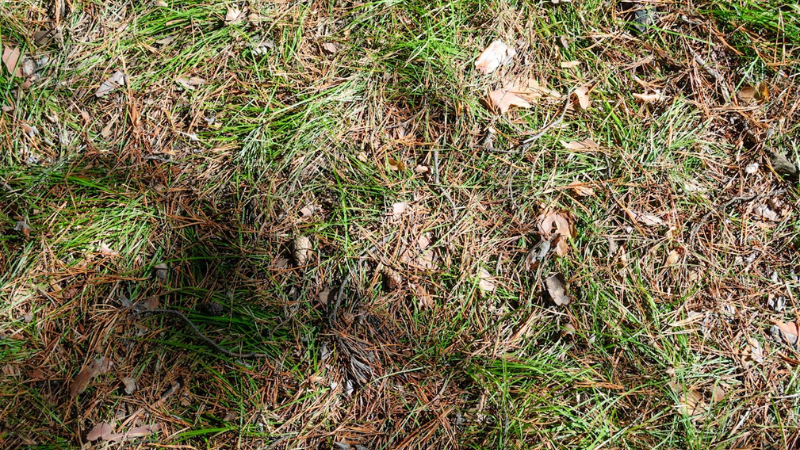
Before we get into specific lawn issues, it’s important to understand the playing field: Calgary’s climate is dry. Not just any dry, it’s “air pulls moisture out of everything” dry.
Our lawn care expert says, “Calgary is one of those places where you can water your lawn and still lose moisture within hours. Between the sun, wind, and low humidity, the challenge isn’t just watering—it’s getting that water to stay where the roots can actually use it.”
This is because you’re dealing with:
- Low humidity: Moisture evaporates quickly, even after watering.
- High sun exposure: Long daylight hours increase surface drying and heat stress.
- Frequent wind: Strips moisture from both soil and grass blades.
- Rapid evaporation: Water often disappears before it can reach deeper root zones.
- Large temperature swings: Warm days followed by cooler nights can stress turf and disrupt consistent growth.
In short, moisture doesn’t stick around. Water can evaporate before it ever reaches deeper roots. Soil dries out quickly, and grass is constantly playing catch-up.
So when a lawn starts struggling here, it’s rarely because you didn’t water. It’s because the water didn’t go far enough.
2. Chinooks Cause Lawn Stress
Chinooks can swing temperatures dramatically, often within hours. And that rapid warming and cooling create a cycle.
The snow melts quickly, the soil becomes wet, temperatures drop again, and moisture freezes or evaporates.
This repeated freeze–thaw pattern puts stress on the root system before the growing season even begins. You’re left with uneven growth in spring, with thin, patchy areas through your yard.
“Chinooks are great for melting snow, but not so great for your lawn. That constant freeze–thaw cycle puts a lot of stress on the root system early in the season, so what you’re seeing in spring is often your lawn trying to recover, not just wake up,” says one expert.
Now, this doesn’t mean your lawn is failing; it’s actually recovering. But that early stress means it enters spring with less energy and weaker roots. And that makes it more vulnerable to everything that follows.
3. Water Isn’t Reaching the Roots
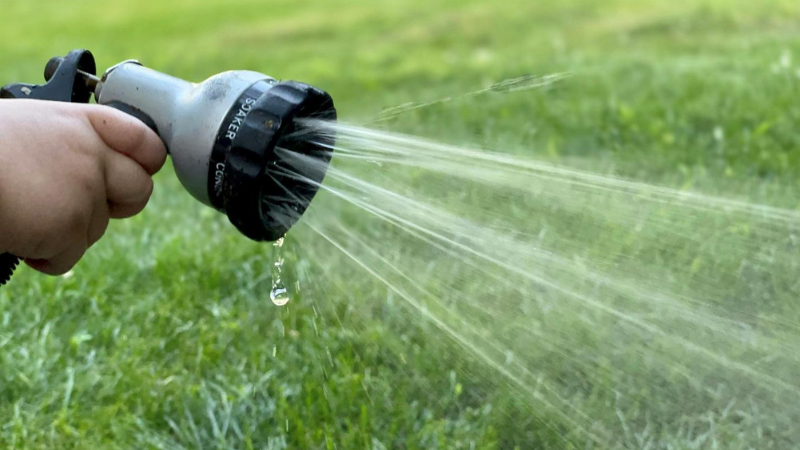
We’ve already discussed the climate. And what do we do to address the dryness? We water.
And therein lies the problem. It’s your watering habits, combined with climate, that aren’t supporting deep root growth.
Here’s what is happening:
- Light, frequent watering
- Water sitting near the surface
- Quick evaporation due to sun and wind
- Roots staying shallow
Shallow roots mean the lawn becomes dependent on constant watering. The moment moisture drops, stress shows up fast.
Now layer in water restrictions (fewer watering days, limited windows), and the problem compounds. During the summer, outdoor watering is typically limited to specific days and times based on where you reside (odd/even system), with watering only allowed during early morning or evening hours.
This means:
- You can’t water every day
- You have limited time windows
- You need your watering to actually count
Here’s what actually works better:
- Deeper, less frequent watering
- Giving water time to soak into the soil
- Encouraging roots to grow downward, not just outward
When roots go deeper, the lawn becomes more resilient. It can handle dry periods without showing stress immediately.
4. Mowing Your Lawn Too Short
Cutting your lawn too short (less than 2.5”), also known as scalping, weakens it in several ways. Short grass loses moisture faster, has less surface area for photosynthesis, and exposes soil directly to sun and wind.
That exposed soil heats up and dries out quickly, which puts additional stress on the roots.
So even if you’re watering properly, a low mowing height can undo a lot of that effort.
One expert says:
“Cutting your lawn too short is one of the fastest ways to dry it out in Calgary. You’re basically exposing the soil to direct sun and wind, which accelerates moisture loss and puts more stress on the turf. What do we recommend? 3”+.”
Keeping your lawn slightly longer helps it:
- Retain moisture
- Shade the soil
- Maintain more consistent growth
5. Soil Problems
A lot of Calgary lawn issues aren’t visible right away since they’re happening below the surface. Compacted soil is a big one.
When soil is dense:
- Water doesn’t penetrate evenly. It either sits on the surface or runs off, leaving some areas dry while others stay overly wet
- Roots struggle to expand. Instead of growing deep, they stay shallow and become more vulnerable to heat and drought
- Oxygen flow is limited. Roots need air to function, and compacted soil restricts that exchange
- Nutrients don’t move effectively. Even if fertilizer is applied, it can’t reach the root zone where it’s needed
So even if you’re doing everything right, the lawn can’t fully respond. One of the easiest ways to spot this is how water behaves.
If you notice that the water is pooling or running off instead of soaking in, or the soil is feeling hard or crusted… it’s usually a soil issue, and not a watering issue.
Improving soil structure with aeration is what allows things like watering, fertilizing, and overseeding to work.
6. Fertilizer Alone Doesn’t Fix Thin Lawns
If the lawn looks weak, just feed it more. That’s just how most people think.
Fertilizer definitely helps, but it’s not a complete solution.
It provides nutrients, but it doesn’t fix the conditions those nutrients depend on. If the soil is compacted, water isn’t moving properly, or roots are shallow, the lawn can’t fully use what it’s being given. That’s why you might see a quick green-up after fertilizing, only for the same thinning pattern to return a few weeks later.
It’s a boost, not a fix.
For fertilizer to actually make a lasting difference, the lawn needs a few things working in its favour:
- Soil that allows roots to expand
- Moisture that reaches below the surface
- A root system strong enough to support consistent growth.
Without that foundation, you’re not really strengthening the lawn, you’re just giving a temporary lift to something that’s still struggling underneath.
7. Lawns May Turn Brown in Summer (Even When You Water Them)
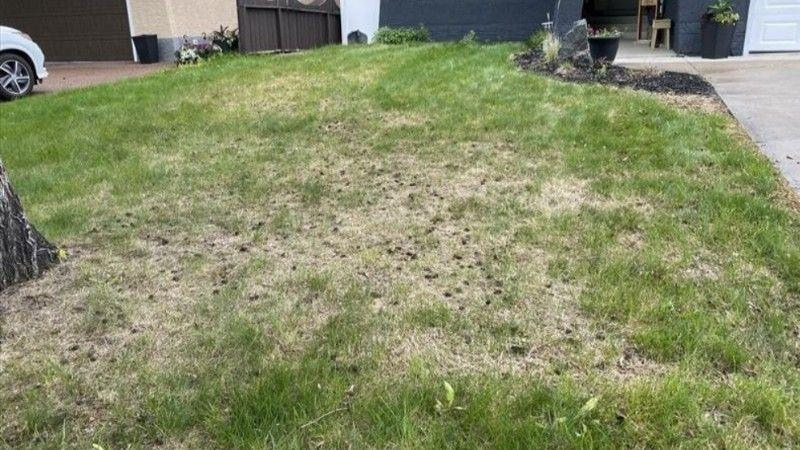
By the time summer hits, all of these factors start to show up clearly. Summer doesn’t create the problem; it exposes it.
You’ll often see:
- Brown patches that don’t respond evenly to watering
- Areas that dry out faster than others
- Thin or inconsistent growth
- Grass that turns dull or greyish before it fully browns out
- Footprints that linger longer instead of bouncing back
- Water pooling in some areas while running off others
- Sections that green up briefly after watering, then fade quickly again
- A lawn that never quite looks uniform
Work With Calgary’s Climate, Not Against It
Your lawn isn’t being stubborn, it’s just being Calgary. The conditions here are tough, and if you treat your lawn like it’s somewhere else, it’s going to show.
Here, success comes from working with the conditions, not against them. That means watering in a way that actually reaches the roots, keeping your mowing height a little higher to protect the soil, addressing compaction early, and focusing on building strength below the surface.
That’s exactly how we approach lawn care at Green Drop.
Instead of tackling one issue at a time, we look at how everything connects. When everything, from aeration, overseeding, fertilization to weed control, is done in the right sequence, and timed properly, your lawn becomes more resilient.
If your lawn hasn’t been responding the way you expect, there’s usually a reason underneath it.
Book your lawn care package in Calgary and give your lawn what it needs to thrive.