


Chinch Bugs Are Moving North — Is Your Red Deer Lawn Prepared?
Reading time: 5 minutesFor most Red Deer homeowners, chinch bugs have never been a real concern.
You've seen the stories, maybe heard a neighbour mention it, and taken for granted that it’s a Calgary problem that would stay south of the city limits.
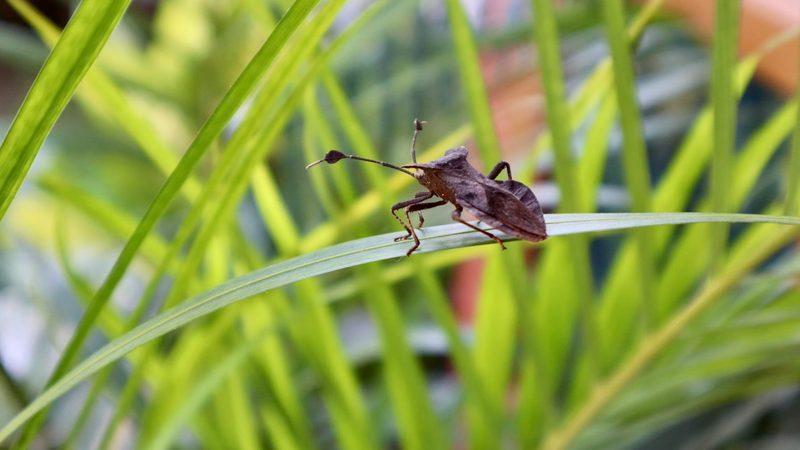
Unfortunately, it’s this assumption that now makes Red Deer lawns vulnerable.
Chinch bugs have been expanding their range steadily across Alberta, and Red Deer sits directly in their path. If you’re not yet keeping an eye out for it, your lawn is at risk.
Why Chinch Bugs Are Moving North
The spread isn't random. There are three forces driving it, and they've all been building at the same time.
- Warmer summers: As temperatures rise, the natural controls that once kept insect populations in check are weakened. Meanwhile, the conditions that allow pests to thrive and reproduce are extended. Chinch bugs need heat to complete their lifecycle. More of it means longer seasons and faster-growing populations.
- Ongoing drought conditions: Alberta has a drought problem. Drought-stressed turf is weakened turf with shallow roots, thin grass cover, and soil that dries out fast. And weakened turf is exactly what chinch bugs colonize most aggressively.
- Expansion corridor forming along Alberta's urban spine: What began as a southeast Calgary problem has now spread to every quadrant of the city. The bugs have already reached the Northwest parts of the city. Red Deer, roughly 150 kilometres north of Calgary, is the next logical chapter. And that corridor is made up of connected turf, subdivision to subdivision, city to city.
Which Red Deer Neighbourhoods Are Most at Risk
The same risk factors that made Calgary's southeast communities ground zero apply here: Young turf with shallow root systems, open south- or west-facing lots, minimal tree cover, and fast-draining soil.
In Red Deer, that points to several specific communities.
- Anders is one of the city's newer subdivisions, with open lots that see full afternoon sun and soil that drains quickly after rain. These are exactly the dry, heat-stressed conditions where chinch bugs establish fastest.
- Timberlands has south-facing exposure and relatively young turf in many areas, with the sandy substrate common to newer Red Deer builds that dries out long before older, more organically rich soil would.
- Vanier Woods sits in a transitional range with a mix of newer and mid-age housing. Here turf age and condition vary enough that stressed sections become entry points for infestations to take hold and spread into healthier neighbouring yards.
- Clearview, elevated and exposed to regular wind, loses moisture faster than more sheltered communities. Homeowners here are often watering more than required, and still ending up with dry, stressed grass by mid-July.
The Misdiagnosis Problem
Chinch bugs are particularly dangerous in a city like Red Deer because most homeowners here haven't dealt with them before.
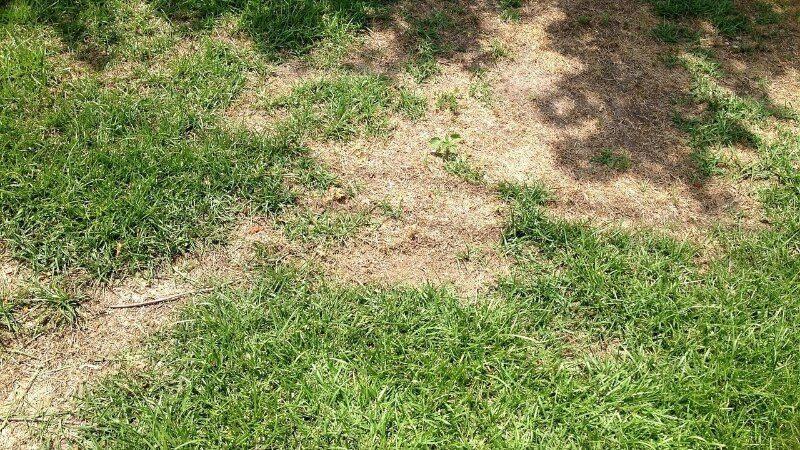
Here’s what you need to know:
- Chinch bug damage looks identical to drought stress damage. Both show up as irregular brown or straw-coloured patches during the hottest part of summer. Both appear to get worse during dry stretches. Calgary homeowners have repeatedly misread chinch bug damage as drought stress. And the same mistake is almost certain to happen in Red Deer, where the pest is newer and less recognized.
- The dangerous instinct is to water more, no matter how dry the lawn looks. Extra water won't stop insect feeding. If chinch bugs are the cause, watering can actually compound the problem by encouraging fungal disease on top of existing insect damage, turning a manageable infestation into a lawn that needs full restoration.
- The tell-tale difference is that drought-stressed lawns typically show some recovery within days of deep watering. Chinch bug-damaged areas keep spreading regardless, and the feeding damage often accelerates during the same hot, dry conditions that make the misdiagnosis so easy.
If you're still not certain what you're looking at, our guide to identifying lawn damage from bugs or fungus walks through what to expect.
What Red Deer Homeowners Should Do Right Now
Don't wait for widespread brown patches. By the time an infestation is visible across a large section of lawn, it's already well-established and significantly harder to treat.
- Do a physical inspection. Start checking now along the edges of your driveway, sidewalks, and south-facing fence lines. Heat-reflective surfaces stress turf earliest, and this is almost always where chinch bug activity shows up first. You're looking for irregular straw-coloured patches with a yellowing border where active feeding is happening at the perimeter. If those patches aren't recovering after watering, that's your signal to act.
- Try the tin can test. Push an open-ended tin can about 5 centimetres into the soil at the edge of a suspicious patch, fill it with water, and watch for 10 minutes. If chinch bugs are present, they'll float to the surface. It's a simple, reliable way to confirm what you're dealing with before doing anything else.
- Keep your grass longer through July and August. Mowing at 2.5–3 inches through peak summer shades the soil surface, retains moisture longer, and makes your lawn significantly less hospitable to chinch bugs. Stressed, scalped turf in full sun is their preferred environment. Longer grass removes one of the conditions they depend on.
- Avoid heavy nitrogen fertilizer in summer. Excess nitrogen pushes soft, lush top growth that chinch bugs actively seek out. If your lawn is in a high-risk community, hold off on summer feeding and save fertilizer applications for fall when they do the most good.
Early-stage nymphs are far easier and less costly to control than a mature, established infestation. Treating in June and August can often become the difference between a lawn that’s safe and one that needs resodding.
Protect Your Red Deer Lawn Before Chinch Bugs Do
Red Deer is at an inflection point. Chinch bugs will most likely arrive in what will be for them a new city this season, and homeowners need to be ready.
If you're in Anders, Timberlands, Vanier Woods, Clearview, or any sun-exposed community in Red Deer with younger turf, now is the time to get ahead of it. Book our Lawn Defender program, for the perfect proactive layer that stops chinch bugs from gaining a foothold in your lawn.