


Why Calgary Lawns Turn Brown in Summer (Even When You Water Them)
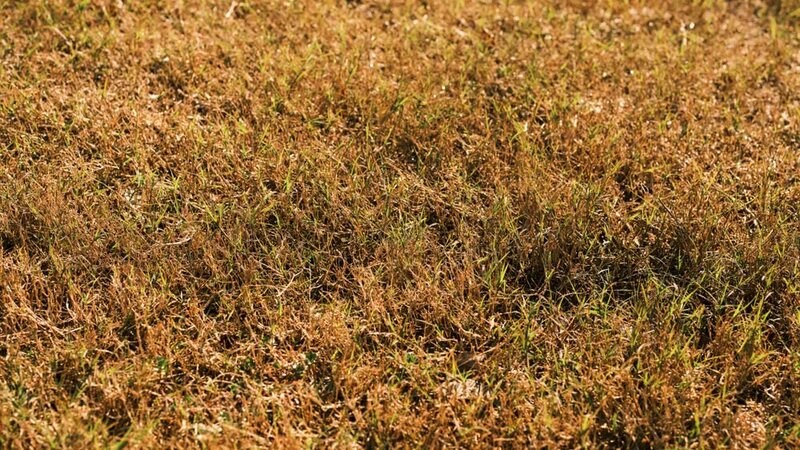
Reading time: 4 minutesThe sprinklers are running, the water bill is climbing, and yet your Calgary lawn is still turning brown.
The first thought that comes to mind is that your grass is dehydrated and needs more water, but more watering isn’t always the answer.
Brown grass in a Calgary summer (even late summer) isn't really the problem. It's a symptom with several distinct causes, and responding to the wrong one can make things worse.
Before you adjust anything, it helps to know what you're actually dealing with. And our guide to common lawn problems in Calgary covers this in detail. Here's how to read what your lawn is telling you.
1. It Might Be Dormancy
Calgary lawns are almost universally cool-season grasses like Kentucky bluegrass, fescue, and ryegrass. These varieties thrive in the 15–24°C range. When summer temperatures push well past 30°C for extended stretches, they go dormant.
Growth stops, the lawn turns brown, and the grass essentially waits for conditions to improve.
Dormant grass is not dead grass. It looks dry and feels crisp underfoot, but the crown stays alive. When temperatures ease and rain returns, it comes back.
The mistake here is panic-watering. Aggressively watering a lawn that's in healthy dormancy can actually disrupt the process and ramp up stress.
You want to maintain dormancy safely, which means watering just enough to keep the crown hydrated. Think: a light cycle every two to three weeks. Let the season do its work.
2. The Watering Is Wrong, Not Insufficient
Frequent, short watering cycles are one of the most common contributors to struggling Calgary lawns in summer. Running the sprinklers every day for fifteen minutes keeps moisture at the surface, which is exactly where roots stay when that's where the water is.
Surface roots have no buffer when a dry stretch hits. They're the first to go and the slowest to recover.
- Check soil moisture before watering. Calgary's clay-based soils retain more moisture than many homeowners assume, meaning the lawn may need less frequent watering than the schedule suggests.
- Deep, less frequent cycles train roots to follow moisture downward, building the drought resilience that keeps lawns green through Calgary's unpredictable summers.
- Water before 10 a.m. Evening watering in Calgary's climate sets up exactly the conditions that fungal disease needs overnight.
3. It Might Be Chinch Bugs
If you see brown patches:
- Appear near driveways and sidewalks
- In the sunniest parts of the lawn
- Refuse to recover no matter how much you water
That's the chinch bug pattern, and it's consistently misread as drought stress.
Chinch bugs pierce grass blades and inject a toxin that prevents the plant from moving water internally. More watering doesn't reverse that damage. The patches keep spreading.
If you're in the SE, SW, or NW communities, it's worth ruling this out before adjusting your watering schedule. Or you could check out our chinch bug lawn defender program.
4. The Water Isn't Reaching the Roots

Calgary soils are clay-based and tend to be alkaline and compaction-prone. Compacted clay blocks water from penetrating to the root zone, meaning a lawn can be watered on schedule and still be drought-stressed below the surface.
Thatch build-up compounds it, absorbing water before it reaches the soil at all.
If you see water pooling on the surface, or runoff before the soil is saturated, that means water isn’t reaching the roots.
Aeration fixes the problem by breaking up compaction and opening channels for water and oxygen to reach the root zone.
The Real Fix Starts With the Right Diagnosis
Go out and check out your lawn.
Is the browning uniform across the whole lawn, or patchy and irregular?
Is water pooling on the surface instead of soaking in?
Are the worst patches clustered near your driveway or sidewalk, stubbornly refusing to respond to watering?
Each of those details points somewhere different. And each one needs a different response. The lawn is giving you information. You don’t want to ignore it and reach for the hose out of habit.
Our guide to common lawn problems in Calgary can help you understand what you're seeing.
And when you're ready for a seasonal plan built around what your lawn actually needs, book your lawn care package in Calgary.