


Fall Aeration in Calgary: Why September Is Ideal (and November Might Be Too Late)
Reading time: 4 minutesMost Calgarians who aerate their lawns in fall do it when it feels convenient. It’s usually sometime late October/early November, when temperatures have dropped significantly.
That timing feels reasonable.
But it's also, most likely, a little late to get the full benefit of what aeration is supposed to do.
The window for effective fall aeration in Calgary is narrower than most people realize, and it's shaped by factors specific to this city's climate.
Getting the timing right is the difference between aeration that actually strengthens your lawn going into winter and aeration that delivers a fraction of its potential.
Why Calgary Soil Needs Aeration More Than Most
Calgary's soils are predominantly clay-based. Clay soils compact readily and are difficult to aerate once conditions tighten. Foot traffic, mowing, and normal summer use press clay particles together over time, reducing the pore space that grass roots need to access water, oxygen, and nutrients.
Then winter arrives. Calgary's freeze-thaw cycle doesn't just sit on top of compacted soil; it works it hard.
The repeated cycle of freezing and thawing through winter puts significant stress on root systems, leaving lawns thin and patchy by spring. Compacted soil going into that cycle is compacted soil coming out of it, plus the accumulated damage of a Calgary winter on top.
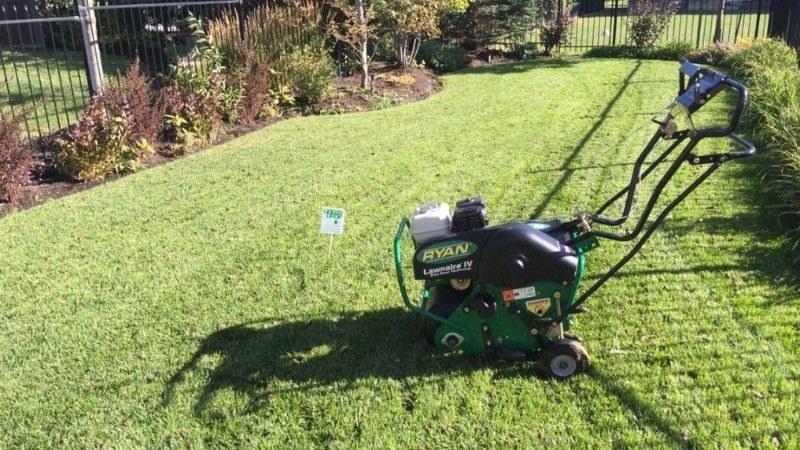
Aeration breaks that cycle. Core aeration pulls plugs of soil from the lawn, reopening channels for roots to grow into and allowing water and nutrients to reach the root zone. But the timing of when those channels open determines almost everything about how useful they are.
What Fall Aeration Is Actually Doing
There is a reason we recommend fall aeration over any other season. In fall, cool-season grasses are in an active growth phase.
Roots are pushing outward and downward in preparation for winter. Open the soil in September, and those roots will actively grow into the new channels over the following four to six weeks before the ground locks.
In spring, aeration happens after a Calgary winter has already done its damage. Roots are recovering, not actively expanding. The channels are open, but the grass is playing catch-up rather than taking full advantage of them.
Fall aeration sets the lawn up for winter. Spring aeration helps a lawn recover from it. Both have value, but they're not interchangeable. And for compaction-prone Calgary clay soils, fall is where aeration delivers the most return.
Why September Is the Window
The four to six weeks of active root growth that make fall aeration effective require soil temperatures to remain consistently above 10°C. In Calgary, that window closes in mid-to-late October in most years (sometimes, we might have an unusually warm fall).
Work backwards, and early-to-mid September is where the timing lands. Aerating in September gives roots the full run of that window before growth slows and the ground begins to lock.
Aerating in September or October still captures all that benefit, though the margin shrinks.
If you’re booking in November, it’s already too late. You want to get that aeration scheduled a few weeks before the first frost. Soil temperatures are already dropping below the threshold where meaningful root expansion happens. The channels are open, but the grass can't take advantage of them before winter sets in.
There's also the overseeding question. September aeration pairs naturally with overseeding. The open cores provide ideal conditions for the new seed to thrive, and new grass has time to germinate and establish before freeze-up.
Overseeding in late October may make germination unreliable. The seed may sit dormant through winter and germinate erratically in spring, or not at all.
What to Do Alongside September Aeration
Aeration on its own is valuable. Aeration combined with the right follow-up treatments is significantly more so.
- Overseeding. Do this immediately after aeration to take advantage of open cores for seed-to-soil contact. In Calgary, September overseeding with a cool-season fescue blend gives new grass four to six weeks to establish. This is enough time for it to develop meaningful root depth before the ground freezes.
- Fall fertilizing. Done after aeration, it fuels root development through the remaining growing weeks and improves cold hardiness. A lawn that goes into a winter with a strong root system and freshly aerated soil is a lawn that comes out of it in better shape than one that didn't get either.
Aeration, overseeding, and fall fertilizing work as a system. September/October are the months when all three can be done in the right sequence with enough time for each to deliver results before freeze-up.
Book September, Early October - Not November
Calgary's clay soils, compressed growing season, and Chinook variability all point to the fact that the fall aeration window is shorter here than in most of the country.
If your lawn has been showing drainage problems, thin patches, or slow recovery after summer stress, fall aeration is the best thing you can do before winter.
Book your fall aeration in Calgary with Green Drop before the October window closes. Pair it with overseeding and fall fertilizing for a lawn that's better positioned going into the Calgary winter.