


Why the Home Depot Product You Bought Isn't Getting Rid of Your Weeds
Reading time: 5 minutesYou've done everything right.
You spotted the weeds, drove to Home Depot, stood in front of an entire wall of weed killers trying to decipher the labels, picked the one that sounded the most convincing, and followed every instruction to the letter.
Yet, a few days later, those weeds are back up…staring right at you every time you step outside.
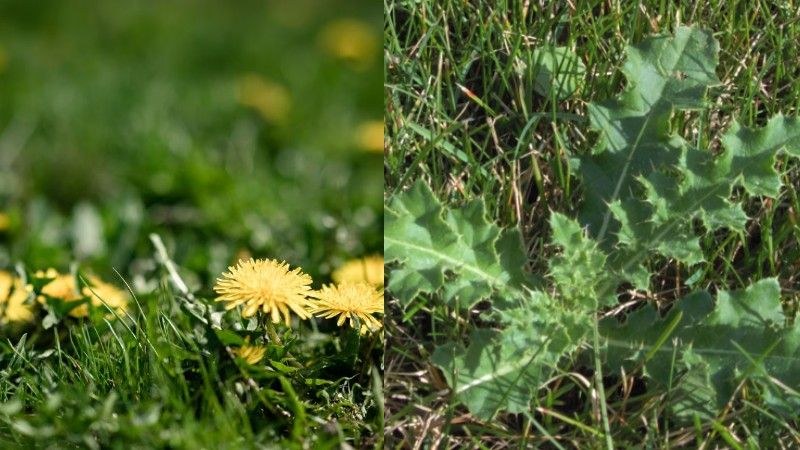
You might blame the weed killer and get the urge to try a new one, but that’s not the real problem.
The thing is, different weed killers are designed to do different jobs. Using the wrong product, or even the right product at the wrong time, means nothing changes.
Weed Killer Isn't Just "Weed Killer"
All weed killers DO NOT work the same way.
The bottle may say it, but there are several different types of herbicides, each designed for a specific purpose.
Some prevent weeds from ever sprouting. Others only work once weeds are already growing. Some are safe for lawns, while others kill almost every green plant they touch.
Understanding those differences is often the reason one product works as expected, while another appears to do nothing at all.
The Different Types of Weed Killers (And What They're Designed to Do)
1. Pre-Emergent Herbicides
Pre-emergent herbicides are designed to stop weed seeds from germinating.
Think of them as preventative treatments rather than cures. They create a barrier near the soil surface that prevents young weed seedlings from establishing.
Once weeds are already visible above the ground, pre-emergent products have largely missed their opportunity.
2. Post-Emergent Herbicides
Post-emergent herbicides work on weeds that are already growing.
These are the products most homeowners are familiar with because they're applied directly to visible weeds.
Depending on the product, they either damage the foliage on contact or move through the plant into the root system to provide more complete control.
3. Selective Herbicides
Selective herbicides are designed for lawns.
They target broadleaf weeds like dandelions and clover while leaving most turfgrass relatively unharmed.
That's why they're commonly used on residential lawns where the goal is to remove weeds without damaging the grass around them.
4. Non-Selective Herbicides
Non-selective herbicides do exactly what their name suggests: they kill almost any green plant/turf they come into contact with.
They're excellent for gravel driveways, fence lines, sidewalks, and other non-turf areas. But they're not designed for use on healthy lawns unless you're planning a complete renovation.
5. Residual Herbicides
Residual herbicides remain active in the soil after application.
Rather than simply controlling existing weeds, they continue to prevent new weeds from becoming established for an extended period.
They're commonly used in vegetation control programs for hardscape areas, but generally aren't suitable for residential turf where you still want healthy grass to grow.
Reasons Your Weed Killer Didn't Work
Even if you purchased a quality product, several factors can affect whether it performs the way you expect.
Here are some of the most common reasons homeowners end up disappointed.
- You chose the wrong type of herbicide. A pre-emergent won't kill weeds that are already growing, while a post-emergent won't stop the next wave of weed seeds from germinating. Using the wrong product for the problem is one of the most common reasons treatments appear ineffective.
- The weeds were too mature. Younger weeds are generally much easier to control than well-established plants with deep, extensive root systems. By the time perennial weeds are fully developed, they often require more than a single application.
- The weather wasn't cooperating. Too much rain shortly after spraying can reduce how much product is absorbed. Extreme heat, drought stress, or windy conditions can also reduce effectiveness because weeds aren't actively growing or the product doesn't stay where it's intended.
- The product wasn't designed for that particular weed. Not every herbicide controls every weed equally well. A product that's highly effective on dandelions may produce very different results on Canada thistle, creeping bellflower, or other difficult perennial weeds.
- You expected one application to solve a season-long problem. Weed seeds don't all germinate on the same day. New seeds continue arriving throughout the growing season from wind, birds, neighbouring properties, and surrounding landscapes. Even after existing weeds are controlled, new ones can continue appearing.
You remove one problem only to see another one appear a few weeks later. That's also where professional weed control starts to look very different from DIY applications.
Why Professional Weed Control Works Better
One of the biggest misconceptions about professional weed control is that it simply involves stronger chemicals. In reality, the biggest difference is the strategy.
- Professional weed control starts by identifying what weeds are actually present and understanding where they are in their growth cycle. That determines which products are most appropriate and, just as importantly, when they should be applied.
- Timing plays a huge role. A treatment applied when weeds are actively growing is often much more effective than the exact same product applied when weeds are stressed by heat or drought.
- Professionals also know that weed control isn't a one-time event. Different weeds emerge at different times throughout the season. The weather changes. Growing conditions change. New weed seeds continue arriving. This requires consistent monitoring and timely treatments rather than relying on a single application to solve the problem for the entire year.
The ultimate goal is to reduce weed pressure throughout the growing season while allowing healthy turf to become the dominant plant in the lawn. Weed Control Is a Season, Not a Saturday
DIY weed killers certainly have their place, especially for small problems or isolated weeds. But if you're finding yourself buying another bottle every few weeks, it's usually a sign that the issue isn't the product but the overall approach.
Effective weed control combines the right product, the right timing, proper identification, and consistent follow-up throughout the growing season. That's why professional weed control often produces more reliable, longer-lasting results than one-off applications.
If you're tired of fighting the same weeds year after year, book your lawn care package today and let us help you take a smarter, more consistent approach to weed control.
Green Drop proudly provides professional weed control and lawn care services in Calgary, Red Deer, Edmonton, Saskatoon, Winnipeg and Regina, helping homeowners enjoy healthier, greener, weed-free lawns all season long.