


Red Thread Lawn Disease in Red Deer: What It Is and How to Fix It
Reading time: 5 - minutesSpring in Red Deer doesn’t always roll in warm and dry. More often, the weather stays damp, the snow melts slowly, and the ground stays wet.
When your lawn begins to wake up, it doesn’t do so evenly. Certain areas look thin, and maybe you’ve noticed pinkish patches scattered across your grass.
If you look carefully, in the early morning dew, you might even spot faint red threads clinging to the tips of the blades.
That’s red thread.
The good news is that while it looks dramatic, it’s rarely serious. But it is a sign of deeper problems that need addressing.
What Is Red Thread?
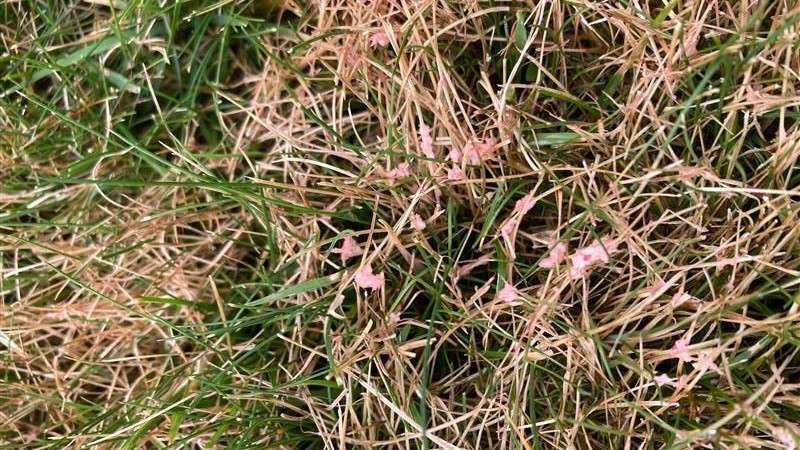
Red thread is a fungal lawn disease. It gets its name from the thin red or pink thread-like structures produced by a fungus (Laetisaria fuciformis) that appear on infected grass blades. These strands are part of the fungus and are most visible when the lawn is damp, especially in morning dew.
You’ll typically see:
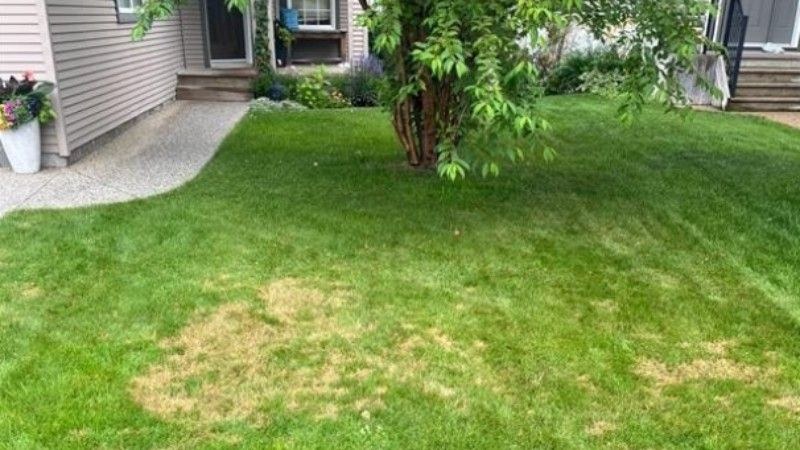
- Small patches, anywhere from a couple of inches to about a foot wide
- Grass that looks pale, pinkish, or rusty
- Blades that appear thin or slightly matted
Keep in mind, red thread almost never kills the grass. It primarily affects the leaf blades, not the roots. That means the lawn looks weakened, but healthy roots remain intact.
Why Red Thread Is a Threat in Red Deer
Red Deer’s climate creates ideal conditions for red thread, especially in spring and early fall.
We tend to see:
- Cool daytime temperatures
- Overnight moisture from dew
- Prolonged damp periods after snowmelt
- Lawns coming out of winter low on nutrients
Red thread thrives in temperatures between about 4–24°C. That range lines up almost perfectly with early spring conditions here.
After months under snow, your lawn is low on energy. Nitrogen levels are often depleted. Growth is just starting to resume. Combine that with lingering moisture, and you’ve created an environment where stress-based diseases can show up.
What Actually Causes Red Thread?
Like we mentioned before, red thread is a sign of underlying problems. The fungus is often already present in the environment, but only shows up because of:
1. Low Nitrogen
This is the primary trigger. Nitrogen fuels blade growth and overall turf density. When nitrogen levels are low, grass slows down, thins, and becomes less competitive.
Red thread takes advantage of that slowed growth.
Instead of being outgrown by strong turf, the fungus is allowed to spread across leaf blades. The lawn doesn’t have the vigour to push new growth fast enough to mask the infection.
After winter dormancy, it’s common for lawns to enter spring nitrogen-depleted. If fertilizer hasn’t been applied yet, red thread often appears before the lawn has a chance to fully wake up.
2. Cool, Damp Conditions
Red thread spreads more easily when grass blades stay wet for extended periods. That can come from:
- Extended rainy stretches
- Heavy dew
- Overwatering
- Evening irrigation
If your lawn never fully dries out between moisture cycles, the fungus has more opportunity to move from blade to blade. That’s why it shows up during prolonged damp weather, and not during hot, dry spells.
3. Poor Airflow & Density
Shaded areas tend to experience red thread more frequently. Less sunlight means slower drying. Thick thatch layers can trap moisture near the surface. Compacted soil reduces root strength and overall turf resilience.
Thin lawns are especially vulnerable because there’s less competition at the surface level. Strong, dense turf naturally suppresses fungal spread, while weak turf invites it.
How to Tell If It’s Red Thread (And Not Something Worse)
Not all discolouration is disease. And not all disease is red thread.
Here’s what sets it apart:
- You’ll see red or pink thread-like structures on the tips of blades.
- The patches look faded or bleached, not completely dead.
- Grass remains rooted and doesn’t pull out easily.
- The issue appears during cool, damp weather.
Compare that to something like drought stress, where grass turns uniformly brown and brittle, or snow mould, which often leaves matted grey patches immediately after snowmelt.
If the lawn still has living roots and the patches are relatively small, you’re likely dealing with a stress issue rather than permanent damage.
Do You Need Fungicide to Treat Read Thread
It’s understandable that you’d see a fungal issue and think of chemical treatment. But in most red thread cases, fungicides aren’t needed.
Why? Because red thread is primarily a nutrient and stress problem. Address the underlying problems, and the fungus goes away. Once nitrogen levels are corrected and growth resumes, the lawn often outgrows the infection naturally. New blades replace infected ones, and the appearance improves within a few weeks.
Applying fungicide might temporarily suppress visible symptoms, but it doesn’t address the weakened turf.
How to Treat Red Thread Properly
If you want your lawn to recover quickly and evenly from red thread, focus on strengthening it.
Step 1: Apply Nitrogen
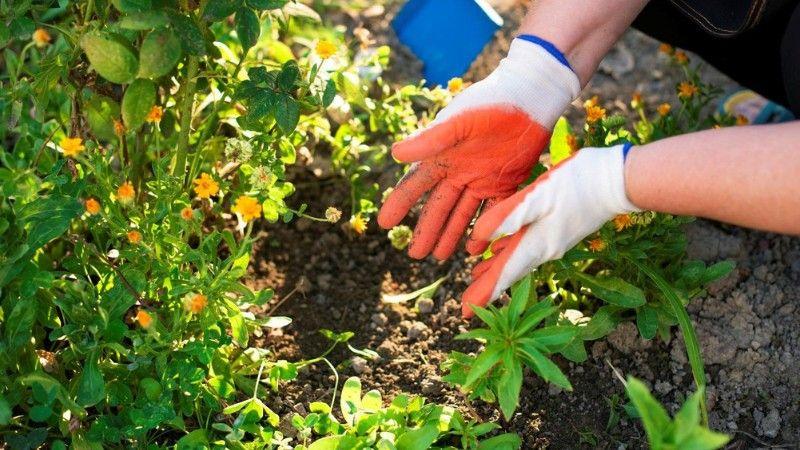
A light nitrogen application is usually the fastest fix. Nitrogen stimulates blade growth and restores colour. As growth accelerates, the lawn naturally replaces infected tissue with healthy new blades, essentially growing out of the damage.
Slow-release fertilizer is ideal because it provides consistent feeding rather than a quick surge followed by decline. Fast-release products can create a burst of growth that stresses turf once it fades.
In many cases, visible improvement happens within one to three weeks, especially when temperatures remain in that cool, active growing range common in Red Deer’s spring.
Step 2: Adjust Watering Habits
Water early in the morning. That allows grass to dry throughout the day, reducing leaf moisture duration, which is a key factor in fungal spread.
Avoid evening watering. You don’t want to keep your blades damp overnight, since extended moisture gives the fungus more opportunity to move.
Also, avoid overwatering. Lawns need deep, infrequent watering rather than light daily sprinkles. Saturated soil weakens roots and reduces oxygen availability, making turf slower to recover.
Step 3: Mow Properly
Don’t scalp your lawn. Cutting too short increases stress and reduces leaf surface available for photosynthesis. Keep mowing height appropriate and blades sharp.
Unless the infection is severe, mulching clippings is fine. If the disease is heavy in isolated areas, you can bag temporarily to reduce spread, but most cases don’t require it.
Step 4: Improve Overall Lawn Health
Long-term, healthier turf resists red thread naturally by outcompeting it.
That means:
- Balanced fertilization through the growing season
- Aeration if soil is compacted
- Managing thatch build-up
- Encouraging dense turf growth
Don’t Let a Simple Nutrient Issue Become a Bigger Problem
Red thread often looks worse than it is. But ignoring it can lead to thinning turf that invites weeds and further stress later in the season.
At Green Drop, our lawn care service focuses on building turf strength from the soil up. When grass is dense and actively growing, red thread becomes a minor, temporary issue rather than a recurring frustration.
If you’re seeing pink or rusty patches in your Red Deer lawn this spring, it doesn’t mean your yard is dying. It likely means your lawn needs nutrients and a structured recovery plan.
Book your lawn care plan today. Our GreenKeepers will evaluate exactly what’s happening with your lawn and recommend the right steps forward.