


How to Care For Your Lawn After a Rainstorm
Reading time: 4 minutesPrairie rainstorms are unlike rain in the rest of Canada.
On the coasts, rain tends to arrive slowly and stay; you get long, grey stretches of drizzle that soil absorbs gradually. On the Prairies, summer storms are intense, fast, and often dump a month's worth of rain in under an hour.
That intensity of a large volume of water hitting the ground in a short window is what overwhelms compacted soil and makes post-rain care more urgent.
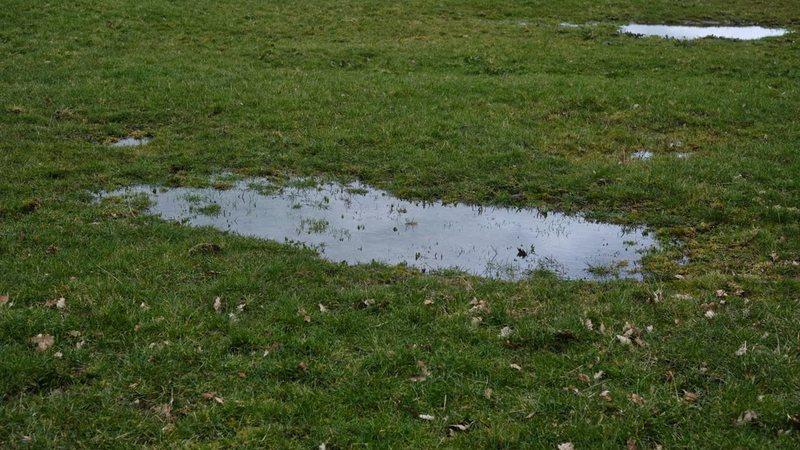
The instinct after a heavy rainstorm is to either ignore the lawn entirely or get straight out and fix what you can see. Both tend to make things worse. Heavy rain creates a specific set of problems that, if left unaddressed, compound over the next 48 to 72 hours.
Here's how to work through them in the right order.
Step 1: Assess Before You Touch Anything
Before reaching for a rake, mower, or anything else, walk the lawn and read it. You're looking for three things:
- Standing water that hasn't drained within a few hours. This signals a compaction or drainage issue, not just heavy rain.
- Displaced or washed-away soil in low-lying areas or along slopes.
- Matted, waterlogged thatch sitting against the soil surface.
This walk determines everything you do next. Don't skip it.
Step 2: Stay Off the Lawn
This is the most ignored piece of post-rain advice, and the most important. Wet soil compacts far more easily than dry soil, and a single pass across a waterlogged lawn, whether on foot or with a mower, can create compaction that takes an entire aeration cycle to undo.
Give the lawn at least 24 to 48 hours before walking on it, working on it, or mowing it.
After that, step on the lawn and check whether you're leaving footprints. If the soil is still sinking under your weight, it's still not ready.
Step 3: Water Still Pooling After 24 Hours? It’s a Compaction Problem
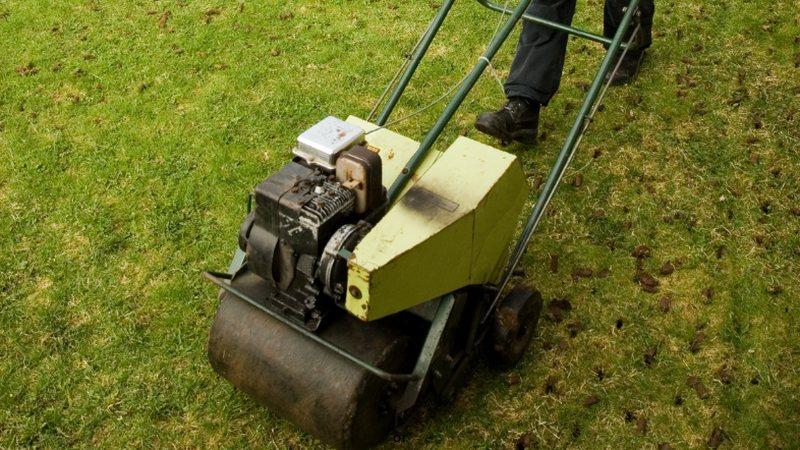
If water is still pooling on your lawn 24 hours after the rain has stopped, the rain has revealed a problem that already existed. Compacted soil loses its pore structure over time, blocking water from percolating down through the root zone and into the subsoil beneath.
Core aeration is the direct fix. By pulling plugs of soil from the lawn, aeration reopens the channels that compacted ground has closed off. This allows water, oxygen, and nutrients to reach the root zone instead of sitting on the surface. A lawn that drains poorly after every rainstorm will keep draining poorly until the compaction underneath is addressed.
Step 4: Monitor for Fungal Disease
Warm temperatures combined with wet conditions are the primary trigger for lawn fungal disease, and on the Prairies that combination is pretty common.
In the three to five days after a heavy rain, watch for:
- Circular brown or bleached patches appearing on previously healthy grass.
- A greyed-out or water-soaked appearance on grass blades in the morning.
- Fine, thread-like growth visible on grass blades in early morning light (a sign of active fungal spread).
Catching early signs within the first few days is significantly easier to treat than a fully established outbreak.
Step 5: Once Dry, Mow Correctly
Once the lawn has dried enough to walk on without leaving impressions, check the grass blades before mowing. Wet blades don't cut cleanly; they fold under the mower deck and tear rather than cut, producing ragged tips that brown within a day and create openings for disease.
When it is safe to mow, raise the blade slightly rather than cutting at your usual height. After an intense rainstorm, grass is already under stress. A higher cut reduces that stress, retains more leaf area for photosynthesis, and avoids the compounding problem of short, stressed turf sitting in still-humid conditions.
Step 6: Get Your Fertilizing Timing Right
Light rain before a fertilizer application is actually ideal since it softens the soil and improves absorption. Heavy rain after fertilizing is a different story. Nutrients wash off the surface and into drainage systems before the lawn has a chance to absorb them.
It's wasted product and wasted money, and it's one of the more common frustrations homeowners report when managing their own treatment schedules.
A professionally managed fertilizer program handles application timing automatically, accounting for recent and forecast weather so treatments are applied when conditions support absorption, not wash off.
When the Same Problems Show Up Every Time It Rains, It's Not the Rain
Repeat pooling, slow drainage, and post-rain fungal outbreaks are rarely one-off events. They're patterns, patterns which point to underlying conditions that individual treatments won't resolve on their own.
If your lawn is showing drainage problems, compaction, or recurring pooling after rain, that's the signal something deeper needs addressing. Green Drop's aeration service and season-long programs handle the timing and treatment, so you're not second-guessing it after every storm.
Whether you're in Calgary, Edmonton, Red Deer, Regina, Saskatoon, or Winnipeg, we've built programs around the Prairie weather patterns your lawn actually has to deal with.