


Common Lawn Problems in Saskatoon (And Why They Keep Coming Back)
Reading time: 5 - minutesIf you feel like you’ve dealt with the same lawn issues every year in Saskatoon…you’re not wrong.
You fix a patch in spring, things start looking better, and then by mid-summer, something else shows up…or the same problem comes back again.
It’s frustrating, but it’s also pretty typical here. Between harsh winters, dry conditions, and quick weather shifts, Saskatoon lawns go through a lot.
We checked in with our GreenKeepers in Saskatoon to get the inside scoop on what these most common issues are, and what actually stops the cycle.

Lawn Problems We See in Saskatoon
1. Intense Prairie Conditions
Low humidity, strong sun exposure, consistent wind, and quick moisture loss are hallmarks of Saskatoon conditions.
Even when it rains, that moisture doesn’t always stick around for long. The soil dries out faster than you’d think, especially once temperatures rise.
Spring will often give the illusion that everything is fine. There’s usually enough moisture early on to get growth going. But that window is short.
As summer approaches, the lawn starts to rely much more heavily on how well it can retain and access moisture below the surface. If roots are shallow or the soil isn’t supporting proper absorption, stress shows up quickly.
2. Lawns That Turn Brown in July
A mystery that astounds every summer. Your lawn looks green and lush in June, and then July hits… and it starts fading.
You keep watering, but certain areas still turn brown or thin out. That’s because the issue is the lawn isn’t equipped to handle stress.
When roots stay close to the surface, they rely on frequent moisture. But in Saskatoon’s dry conditions, surface moisture disappears quickly. So even if you’re watering regularly, the grass isn’t getting what it needs at the root level.
That’s why brown patches often:
- appear unevenly
- show up in exposed or high-traffic areas
- don’t fully recover with light watering
Why Watering Correctly Matters Here
Deep watering, less often but more thoroughly, encourages roots to grow downward, where moisture lasts longer. That makes the lawn far more resilient during hot, dry stretches.
It’s a small shift in approach, but it changes how the lawn responds to stress. Instead of reacting quickly to dry conditions, it becomes more stable.
3. Constantly Fighting Dandelions & Creeping Bellflower
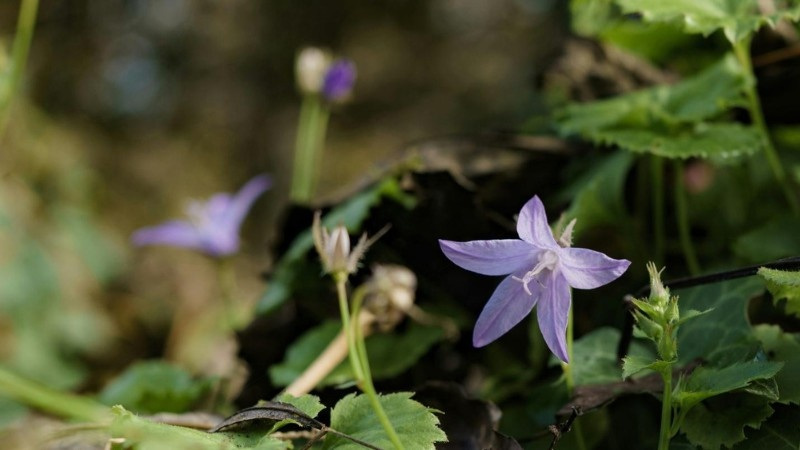
Dandelions are persistent enough on their own. But creeping bellflower is in a category of its own. It spreads underground, which means even if you remove what you see above the surface, it can come right back from the root system.
Both of these weeds thrive in conditions where grass is thin or stressed. They’re not just showing up randomly; they’re taking advantage of opportunity.
Once in, they:
- compete aggressively for nutrients and water
- crowd out the surrounding grass
- continue spreading through seeds or roots
That’s why they tend to come back year after year if the underlying turf density isn’t improved. You can’t get away with just removing weeds. You must deal with the conditions that allow them to win.
4. New Neighbourhoods in Saskatoon Have Worse Weed Problems
If you’re in a newer development, you’ve probably noticed that you’re dealing with weeds a lot more often. That’s largely because of the soil.
New construction often leaves behind:
- disturbed or compacted soil
- lower organic matter
- uneven grading
This makes it harder for grass to establish strong roots early on. And when turf is slow to establish, weeds move in quickly. After all, they just need open space.
5. Weed Pressure from Parks & Open Spaces
Even if you’re doing everything right, you’re not working in isolation. And weed seeds travel.
In Saskatoon, nearby parks, open fields, and unmanaged green spaces act as constant sources of dandelions and other broadleaf weeds.
Wind carries seeds across properties. Birds move them around. They settle into any available space. So even a well-maintained lawn will end up dealing with new weeds showing up.
That’s why weed control needs to be proactive and consistent, not just reactive.
6. Chinch Bugs: The Problem That Looks Like Drought
Chinch bugs are another issue that tends to show up during Saskatoon’s hotter, drier periods. The tricky part is that the damage looks a lot like drought stress.
You’ll see dry, brown patches that seem like they need more water. But if the area keeps getting worse despite watering, there’s a good chance insects are involved.
Chinch bugs feed on grass blades and roots, weakening the plant and preventing it from recovering properly.
To tell the difference, look a little closer:
- The damage is usually patchy and irregular, not evenly spread
- Affected areas don’t improve after watering
- Patches often expand outward over time
- You may notice the grass feels dry and brittle at the surface
If you want to be sure, pull back a small section of grass near the edge of the patch and check the soil surface. In active infestations, you can sometimes spot tiny black-and-white insects moving around.
Why These Problems Keep Coming Back
Most Saskatoon lawn issues repeat because the same conditions are never fully corrected.
That usually comes down to:
- shallow root systems
- inconsistent watering habits
- thin or weak turf
- constant external weed pressure
- soil that isn’t supporting strong growth
Fixing one symptom doesn’t change the bigger picture. So the cycle continues year after year.
How to Fix These Lawn Issues

Breaking the cycle isn’t about doing more. It’s about doing the right things, in the right combination.
Here’s what you need to do:
- Encourage deeper root growth through proper watering practices. Water less frequently, but more deeply, so moisture reaches below the surface and roots are pushed to grow downward rather than staying shallow.
- Fertilize consistently so the lawn can grow thick enough to compete. Steady nutrient support helps the turf recover from stress and build the density needed to naturally crowd out weeds.
- Overseeding plays a big role in rebuilding density, especially in areas that have thinned out over time. Filling in weak spots early reduces open soil where weeds can establish and spread.
- Weed control helps reduce competition, but it works best when paired with improving turf strength. Removing weeds frees up space and resources, but lasting results come from replacing them with healthy grass.
- Soil improvement with amendments like our SoilBooster™ is what ties it all together. Better soil structure improves water absorption, nutrient availability, and overall root performance.
Saskatoon Lawn Care with Green Drop
At Green Drop, we focus on building that foundation early in the season by strengthening turf, improving soil conditions, and helping lawns develop the kind of density that keeps weeds out.
If you’re ready to break the cycle, book your lawn care package in Saskatoon and get ahead of the problems before they settle in again.