


Aeration in Saskatoon: Why Spring AND Fall Both Matter on Prairie Soil
Reading time:Most Saskatoon homeowners approach aeration as a scheduling question: spring or fall? Make a choice, book the service, and you're done.
That mindset doesn’t hurt in most Prairie cities, but it does in Saskatoon.
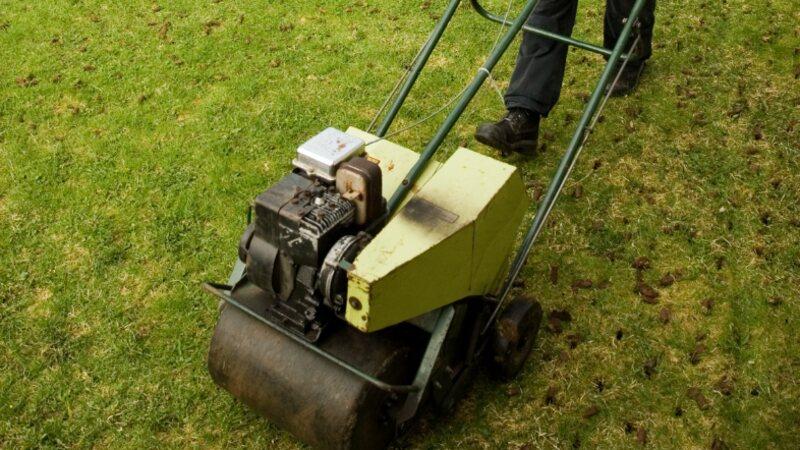
For one, spring and fall aeration don't do the same job. One recovers your lawn from winter. The other prepares it for the next one.
On Saskatoon's compaction-prone clay-Prairie soil, doing only one exacts a heavy toll on your lawn, and the consequences accumulate season over season.
Why Saskatoon Soil Makes This Urgent
Saskatoon sits on predominantly heavy clay-prairie soil.
- It compacts readily under foot traffic, mowing equipment, and the sustained weight of a Saskatchewan snow load.
- Then freeze-thaw cycling works it further. Soil expands and contracts repeatedly through winter, disrupting root structure and closing off the pore space that roots depend on for water and nutrients.
- Saskatoon has one of the earliest average first frost dates among major Canadian cities, around September 15. So, the productive growing season is very short.
Spring Aeration: The Recovery Job
The purpose of spring aeration is recovery after the winter.
After a Saskatoon winter, soil comes out compacted from snow load, ice formation, and repeated freeze-thaw cycles. Root systems that went into dormancy under stress emerge needing open soil to resume active growth. Without it, water and nutrients stay near the surface instead of reaching the root zone, and lawns recover more slowly and thinner than they should.
Spring aeration breaks up post-winter compaction and reopens channels just as the grass tries to reactivate. It pairs well with fertilizer and a top-dress application. Nutrients applied through freshly opened channels reach roots directly rather than sitting on a sealed surface.
What spring aeration is not: the overseeding window. New spring seed competes immediately with weed pressure and faces summer heat before it has time to establish. Save overseeding for fall.
What about timing? Wait until the soil has dried enough that walking doesn't leave footprints and soil temperatures are consistently above 10°C, which is typically around mid-May. June is the outer limit. After that, summer heat stress on new aeration plugs outweighs the benefit.
Fall Aeration: The Primary Window
Fall aeration is the more impactful of the two seasons. September to mid-October is the window. Soil temperatures are still warm enough for roots to actively grow into freshly opened channels, and the grass is already redirecting energy downward in preparation for dormancy.
Aerating into that transition fuels the process the lawn is already doing, rather than interrupting it.
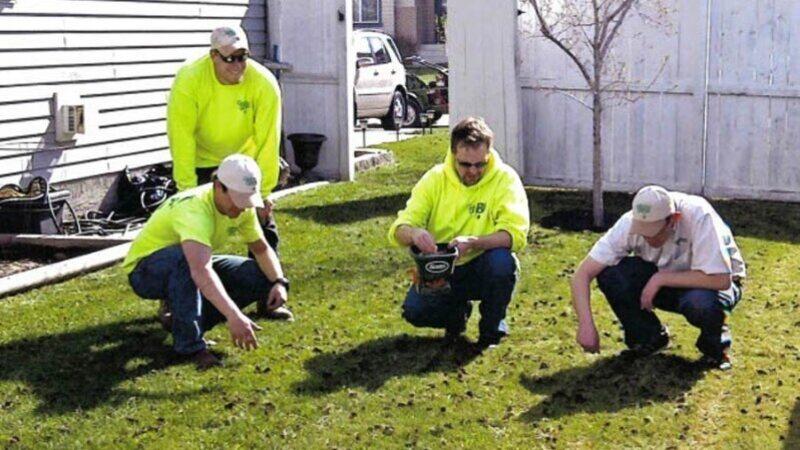
This is also the season where aeration, overseeding, and fall fertilizing work as a coordinated system:
- Overseed immediately after aeration. Open cores provide direct seed-to-soil contact, removing the germination barrier that compacted surface soil creates. New grass has 4–6 weeks to establish before dormancy.
- Apply fall fertilizer in the same window. A low-nitrogen, higher potassium formulation reaches the root zone through open channels, fuelling root development and cold hardiness through freeze-up.
Book early September and don't wait for the lawn to start showing signs that it's struggling. With a first frost averaging around mid-September, the window is shorter than it feels. Fall aeration in late October rarely delivers meaningful root expansion before the ground locks.
Spring vs. Fall: Two Different Jobs
Spring Aeration | Fall Aeration | |
Primary job | Recover from winter compaction and reopen channels closed by freeze-thaw cycling. | Prepare roots and soil structure for five months of Saskatchewan winter. |
Timing window | Mid-May to June, after soil firms up, before summer heat sets in. | Early September to mid-October, before soil temperatures drop below 10°C. |
Pairs with | Fertilizer and top-dress to feed recovering roots through open channels. | Overseeding for direct seed-to-soil contact; fall fertilizer for root energy storage. |
Root activity | Waking up after dormancy. Needs open soil to resume water and nutrient uptake. | Actively pushing downward. Open channels maximise carbohydrate storage before freeze-up. |
Soil condition | Wait until firm and dry; saturated post-melt soil compacts further under equipment. | Act while soil is still workable. Clay-prairie soil locks faster than homeowners expect. |
Weed pressure | Higher. Spring weeds compete directly with any new seed introduced at this time. | Lower. Most broadleaf weeds slow in fall, giving new grass a clean window to establish. |
Impact on following season | Sets the lawn up for a stronger, more even growing season by clearing post-winter compaction early. | Determines how well the lawn survives winter and how fast it recovers the following May. |
Skip it and... | Post-winter compaction carries through the entire growing season, limiting root depth and drought tolerance. | You miss the overseeding window entirely; roots enter freeze-up in compacted soil with no new channels. |
What Happens If You Only Do One
- Fall only: The lawn goes into winter prepared. Roots have open channels, new seed is establishing, and nutrients are stored. But it comes out of winter with unaddressed post-winter compaction. Spring recovery is slower, bare patches from winter damage stay bare longer, and the lawn plays catch-up through June.
- Spring only: The lawn recovers from winter and grows reasonably well through summer. But it goes into the next freeze with compacted, unimproved soil. The overseeding window is missed entirely. The fall fertilizer application doesn't penetrate as effectively without open channels. The cycle repeats.
Neither scenario spells the end of the world, but on Saskatoon's soil, one annual aeration is consistently leaving lawn health on the table.
Is Your Lawn Telling You It Needs Aeration?
If your Saskatoon lawn is showing any of the following signs, you cannot delay aeration any longer:
- Water pools after rain and takes more than a few hours to absorb into the soil.
- A screwdriver won't penetrate 5–6 cm into the soil without significant force.
- Grass is thinning in high-traffic areas like pathways, around play equipment, or along lawn edges.
- Thatch buildup exceeds 1 cm, visible as a spongy, matted layer between the grass and soil surface.
- The lawn looks stressed despite regular watering. Shallow roots from compacted soil dry out faster than the surface moisture suggests.
Book Fall Now. Plan For a Lush Green Yard in Spring.
Book your fall aeration service in Saskatoon to get that stunning green lawn come spring.
If you’ve missed this window, our new lawn care packages get launched in the spring - and spots fill up quickly. Set a reminder so you can book early when spring rolls in!