


Per-Visit vs. Seasonal Snow Removal Contracts: Which Makes Sense for Your Home?
Reading time: 4 minutesWhen you’re shopping for snow removal, pricing is one of the biggest questions. Pay per visit, or sign a seasonal contract? It’s enough to leave anyone feeling a little snowed under.
There isn’t one right answer. Each option makes sense under certain conditions, and depending on where you live, those conditions can change a lot from one winter to the next.
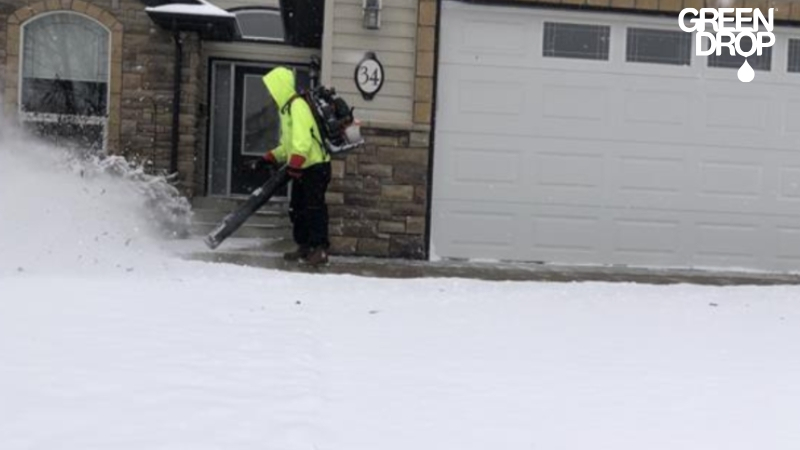
Let’s compare both options, look at what local snowfall means for each, and check out a third option that takes the guesswork out.
How Per-Visit Pricing Works
Per-visit pricing is straightforward: you pay each time a provider clears your property, either at a flat per-visit rate or based on how much snow fell. No upfront commitment, no seasonal obligation.
Where it works well:
- Lighter winters with only a few snowfalls
- Homeowners who want flexibility and no contract commitment
- Properties that only need occasional clearing
The trade-off: In a heavy winter with lots of snowfalls, per-visit costs add up fast. Thirty visits at $60 each come to $1,800 over a season. That’s often more than a seasonal contract costs for the same period. It rewards light winters and gets pricier in heavy ones.
How Seasonal Contracts Work
A seasonal contract sets a fixed price for the full winter, regardless of how many times the provider clears. One number, budgeted once, no per-event surprises.
Where it works well:
- Heavier winters with frequent clearing needs
- Homeowners who like knowing exactly what they’ll pay, whatever the weather
- Properties that need reliable, regular clearing throughout the season
The trade-off: In a lighter winter with fewer snowfalls, a seasonal contract can feel like paying for more service than you needed. Some homeowners come out of a mild February wondering whether per-visit would have been cheaper.
Terms vary a lot by provider. Some seasonal contracts cap the number of visits, set minimum snowfall thresholds before a visit counts, or exclude certain storm types, so read the fine print before you sign.
Why Local Snowfall Complicates the Decision
The per-visit vs. seasonal decision would be easier if Prairie winters were predictable. They’re not. According to Environment Canada Climate Normals, snowfall varies a lot in both volume and pattern. For example:
| City | Avg. Annual Snowfall | Avg. Snow Days Per Year |
|---|---|---|
| Calgary | 128.8 cm | 54 days |
| Red Deer | 106 cm | 37 days |
| Regina | 100.2 cm | 56 days |
| Saskatoon | 73.4 cm | 28 days |
- Calgary has the most unpredictable winter of the four cities. Chinook winds can melt a week’s worth of accumulation overnight, only for another storm to arrive days later. Talk about a plot twist. It also gets the most snow overall, but it’s hard to say which days. That makes per-visit costs in Calgary tough to predict.
- Red Deer gets a milder dose of Calgary’s Chinook swings and a bit less snow, landing somewhere between Calgary and the Saskatchewan cities.
- Regina gets more snow days than Calgary on average, but with less dramatic week-to-week swings. Winters here tend to be steadier, which makes seasonal contracts easier to size up and per-visit costs easier to predict.
- Saskatoon averages the lightest snowfall of the four cities. In lighter years, per-visit pricing looks appealing here. In a heavier year, you’re in the same boat as the rest of the Prairies.
These are averages, so they’re a good baseline. But year-to-year swings can still throw off your pricing decision. Sidewalk rules vary by city too, so check the snow pages for Calgary, Red Deer, Regina, and Saskatoon.
Per-Visit vs. Seasonal: The Trade-Off
| Per-Visit | Seasonal Contract | |
|---|---|---|
| Cost in a light winter | Lower. Only pay when snow falls | May feel like overpaying |
| Cost in a heavy winter | Accumulates fast | Predictable |
| Flexibility | High. No commitment | Lower. Season-long obligation |
| Budget predictability | Low | High |
| Best for | Lighter snowfall cities, flexible schedules | Heavier winters, frequent clearing needs |
| Biggest risk | A heavy month stretches the budget | Paying full price for a mild season |
If you knew in advance what kind of winter you were getting, the right choice would be obvious. The problem is that nobody knows in October whether Calgary is about to have a Chinook-heavy season or its snowiest February in a decade.
That’s where a third option comes in.
The Third Option: Flat Monthly Pricing With Unlimited Visits

At Green Drop, our snow removal services aren't per-visit or a traditional seasonal contract. They’re a flat monthly rate with unlimited visits. Think of it as an all-you-can-shovel buffet.
You pay the same amount whether the month brings two snowfalls or twelve. A heavy February and a quiet November cost the same monthly rate. So you never have to wonder if it was “worth it,” since the price doesn’t change with the weather.
Here’s what you get:
- Snow cleared right down to the pavement
- Anti-ice treatment, no add-on needed
- Your property cleared within 24 hours of every snowfall
- Photos after every visit, so you know it’s done
Our snow season runs from November 1 to March 31, and if you need different dates, just ask. Starting partway through the winter? A mid-season start-up fee may apply.
Request a Flat-Rate Snow Removal Estimate
Whichever way you go, timing matters.
Early bookings typically have more flexibility on start dates. And with flat monthly pricing, you don’t have to guess whether it’ll be a light winter or a heavy one.
Our snow removal service covers Calgary, Red Deer, Regina, and Saskatoon. Request your flat-rate estimate before the November 1 season starts, then let it snow.