


Common Lawn Problems in Edmonton (And How to Solve Them)
Reading time: 6 - minutesIf watering your lawn in Edmonton fixed everything, this would be a very short blog.
But if you’re here, chances are you’ve already tried that—and your lawn is still looking a little… off.
More water didn’t fix the patches. The colour didn’t “green up”. And now you’re wondering if your grass just kinda gave up.
Good news: it didn’t.
Better news: our GreenKeepers in Edmonton see this exact scenario every year.
Between long winters, clay-heavy soil, wet springs, and unpredictable temperature swings, Edmonton lawns go through a very specific kind of stress.
Let’s break down what’s actually happening and how to fix it properly.

1. Chinch Bugs vs Drought Damage
We’re starting off strong.
You see dry, brown patches in the lawn and assume it needs more water. But if those areas don’t improve after a few days of consistent watering, something else is likely going on.
Our Edmonton lawn care specialist says,
“One of the most common misdiagnoses we see is chinch bug damage being mistaken for drought stress. In Edmonton’s hot, dry stretches, chinch bugs become more active, and without proper identification, the problem can escalate quickly.”
Chinch bugs are a frequent culprit in Edmonton. They feed on grass blades and roots, essentially draining the plant while injecting toxins that stop it from recovering.
At a glance, chinch bug damage looks almost identical to drought stress. The difference is in how the lawn responds.
A quick way to tell if it’s chinch bugs:
- Drought damage tends to look more uniform and gradual
- Chinch bug damage is patchy, irregular, and spreads over time
- Affected areas often feel dry but don’t improve with watering
If you suspect insect activity, early treatment is a priority. Left unchecked, these patches can expand quickly and thin out the lawn heading into peak summer.
2. Clay Soil & Drainage Issues
If there’s one underlying issue that connects a lot of Edmonton lawn problems, it’s the soil.
Much of the region sits on heavy clay. That means your lawn holds water easily in spring, and then hardens as conditions dry out.
In the early season, you might notice pooling water or soggy areas that take forever to dry. Later in the summer, those same spots can feel rock-hard underfoot.
This cycle creates problems for root growth.
When soil is compacted:
- Roots can’t expand properly
- Water struggles to penetrate evenly
- Oxygen flow is limited
- Nutrients don’t move efficiently
So even if you’re watering and fertilizing, the lawn can’t fully use what you’re giving it.
Aeration is how you break that cycle. By opening up the soil, you create space for air, water, and roots to move more freely. Over time, improving soil structure makes every other step more effective.
3. Freeze–Thaw Damage from What Winter Left Behind
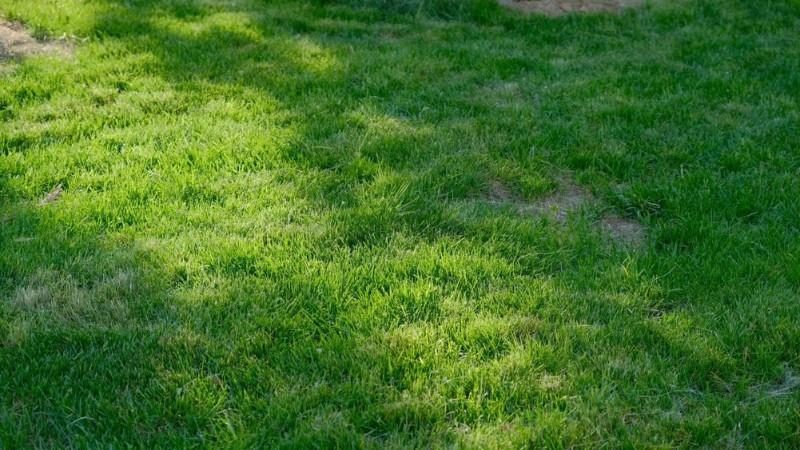
Edmonton winters are known to be inconsistent. Temperatures rise and fall, oftentimes dramatically. That repeated freezing and thawing causes soil to expand and contract, putting stress on the root system.
This can lead to:
- Grass lifting slightly out of the soil
- Root damage in exposed areas
- Thin or uneven patches in spring
You’ll often see this in open areas, along edges, or anywhere snow cover wasn’t consistent.
The lawn may look patchy or weak even before active growth begins.
The key here isn’t aggressive repair right away. It’s helping the lawn re-establish stability as it comes out of dormancy. Light raking, early fertilization, and overseeding help those areas fill back in naturally as temperatures stabilize.
4. Wet Springs in Edmonton Cause Lawn Disease to Show Up Early
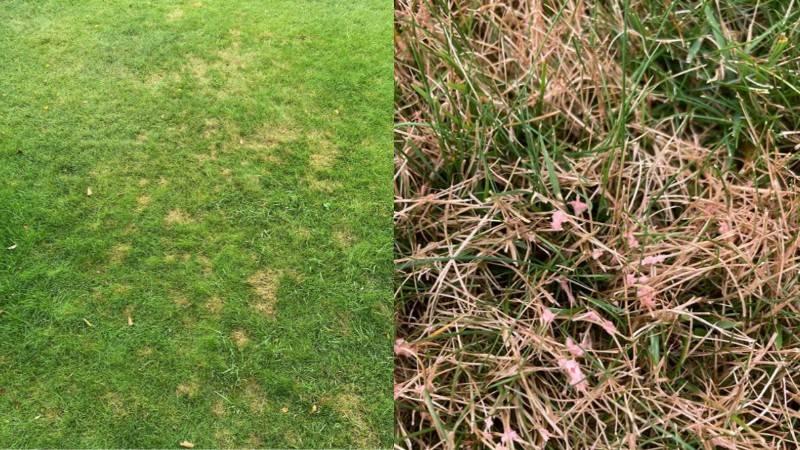
Edmonton springs tend to hang onto moisture. Snow melts slowly, temperatures stay cool, and the ground doesn’t dry.
Our lawn care specialist says,
“A lot of people think something’s seriously wrong when they see those patches in spring, but most of the time it’s just the lawn reacting to all that trapped moisture. Edmonton springs don’t dry out quickly, so these diseases show up fast—but they’re usually a sign the lawn needs support; there’s no need to panic.”
You might notice discoloured patches, matted areas, or uneven colour early in the season. In most cases, this is the lawn responding to excess moisture and low nutrient availability.
The most common diseases you’ll see include:
- Snow mould: Shows up right after snow melts as grey or white, matted patches. Grass looks flattened and stuck together. It’s caused by prolonged moisture under snow cover and usually improves with light raking and better airflow.
- Red Thread: Appears as pink or reddish strands on grass blades, especially in cool, damp conditions. It’s strongly linked to low nitrogen levels, and lawns typically recover quickly once properly fertilized.
- Dollar Spot: Starts as small, round tan patches that can grow and merge over time. More common as temperatures warm, especially when moisture levels fluctuate and fertility is low.
They show up at different points in the season, but they share a common theme. All of them take advantage of weak, slow-growing turf.
The important thing to understand is that these aren’t usually problems that require aggressive chemical treatment. They’re indicators of what you lawn needs:
- Better airflow
- More consistent drying
- Proper fertilization
In most cases, once the lawn is fed and conditions improve, it grows out of the damage naturally.
5. Brown Patches in Summer Aren’t Always Because of Heat
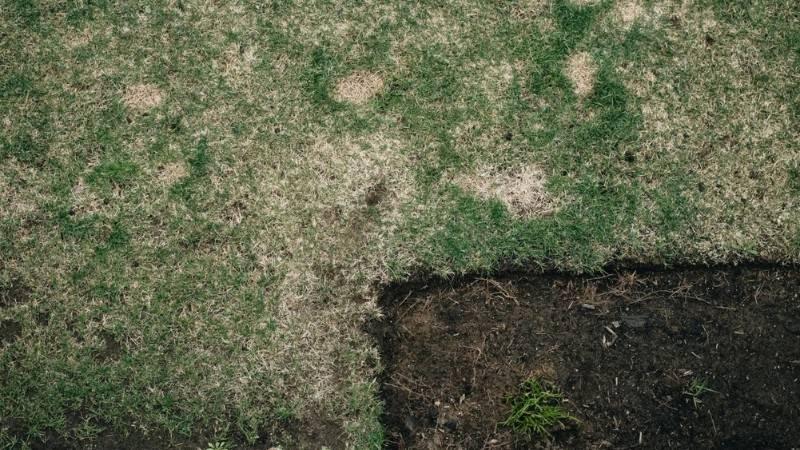
By the time summer arrives, a lot of homeowners assume any brown patch is caused by heat or lack of water. But in Edmonton, summer problems often trace back to spring conditions.
“We get a lot of calls in summer about brown patches, and the assumption is always heat or drought. But a lot of the time, those areas were already struggling earlier in the season. The heat just exposes it,” says one lawn specialist.
If soil remained compacted, roots stayed shallow. If disease weakened turf early, it didn’t fully recover. If moisture wasn’t penetrating properly, parts of the lawn are already under stress before the hottest days arrive.
So when temperatures climb, those weak areas show up first, and you’ll see:
- Irregular dry patches that don’t respond evenly to watering
- Grass thinning in certain zones
- Areas that turn brown faster than the rest of the lawn
Watering helps, but only if the soil can absorb and distribute that moisture effectively.
Deep, less frequent watering is more effective than daily surface watering. But more importantly, improving soil condition earlier in the season makes that watering actually work.
Aeration Is Critical for Edmonton Lawns
Aeration is the one activity that consistently makes the biggest difference in Edmonton lawns. Why? Because it directly addresses the region’s biggest limitation, which is compacted clay soil.
Aeration works by removing small plugs of soil, creating channels that allow:
- Oxygen to reach the root zone
- Water to move deeper into the soil
- Nutrients to distribute more evenly
- Roots to grow stronger and deeper
It also helps reduce surface runoff, which is especially important in areas where water tends to pool in the spring.
In many cases, lawns that struggle year after year simply haven’t had the soil conditions corrected.
Don’t Just Water It, Fix What’s Underneath
All of your lawn problems are connected. Compacted soil affects water movement. Poor drainage leads to disease. Weak roots struggle in summer. And all of it shows up as discolouration on the surface.
Unfortunately, watering alone doesn’t solve that.
At Green Drop, we focus on building lawn health from the ground up:
- Aeration to relieve compaction
- Fertilizer to restore strength and colour
- Overseeding to fill in weak areas
- SoilBooster™ to improve soil performance
- Weed control to reduce competition
When these pieces work together, lawns recover and stay healthy all season. If your lawn isn’t responding the way it should, there’s usually a reason underneath.
Book your lawn care package in Edmonton today and get ahead of the problems.