


What's the Secret to Growing Grass in Shaded Areas?
Reading time: 4 minutesYou’ve spent a few seasons trying to fix that thin, patchy shaded lawn.
Tried everything from different seeds, more water, and extra fertilizer - yet nothing has worked.
It’s not that you’re doing anything wrong.
Honestly, there’s no real secret product or program that helps grass grow in shaded areas.
The answer lies in understanding that different types of shade require different remedies.
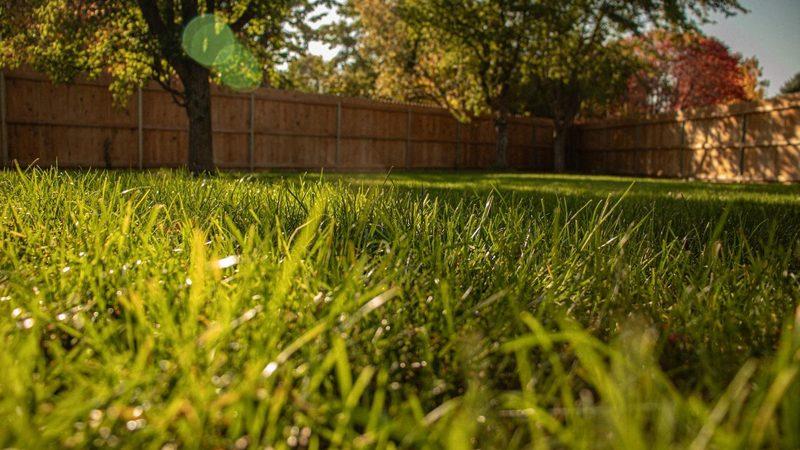
So, What Kind of Shade Do You Have?
You might think: shade is shade. In reality, not all shade is the same.
Here’s how to categorize your shaded area:
- Light shade. Dappled light throughout the day, with a few hours of direct sun. Most cool-season grasses can survive here with the right variety and some care adjustments.
- Moderate shade. Roughly 3 to 4 hours of direct sun daily. Grass can still establish, but variety selection becomes critical. The wrong grass won't make it regardless of how well you care for it.
- Deep shade. Under dense evergreen canopies, along north-facing fences or structures, with fewer than 3 hours of sun. Realistic chances of grass success here are minimal, no matter what you plant or how you manage it.
This is the single-most important step. The shade category determines everything that follows.
The Closest Thing to a Secret: Choose the Right Grass
Most Prairie lawns are seeded predominantly with Kentucky bluegrass. It's the default in most blended mixes and performs beautifully in full sun.
In shade, it struggles badly. Thin coverage, weak root development, and bare patches that never seem to fill in are often simply Kentucky bluegrass doing what Kentucky bluegrass does in low-light conditions.
Fine fescues, specifically creeping red fescue and Chewings fescue, are the most shade-tolerant cool-season grasses suited to Prairie climates.
They grow more slowly, require less nitrogen, and tolerate lower light levels than bluegrass. In light to moderate shade, they're not just a better option; they're the only cool-season option with a realistic chance of establishing well.
The most effective single intervention for a chronically thin shaded lawn is to overseed with a fine fescue blend. Not adding more of what's already struggling, but replacing it with something matched to the actual conditions.
Shade Grass Needs Different Care
Planting the right grass is half the equation. The other half is adjusting how you care for it, because shade grass has different needs than sun grass.
- Mow higher. Shade grass depends on every centimetre of blade surface to capture the limited light available. Raise your cutting height in shaded areas to 8–9 centimetres, higher than you'd mow a sunny section of the lawn. Scalping shaded turf is just a way to set it back.
- Water less, not more. Evaporation is significantly lower under a canopy. Shaded soil stays moist longer, which means overwatering is a bigger risk than underwatering. Consistently wet soil in shaded areas is a reliable path to fungal disease.
- Go easy on fertilizer. Shade grass grows more slowly and doesn't need the same nitrogen input as turf in full sun. Heavy applications push weak, soft growth that shaded grass can't sustain. Less fertilizer, applied at the right time, produces better results than matching what you'd apply to a sunny lawn.
Sometimes It’s Not About the Grass
Under a dense, mature tree canopy, grass is competing against an established root system for water and nutrients. That’s on top of the light problem.
In these conditions, the most useful thing we can tell you is to stop fighting a battle you’re bound to lose.
Instead, go for a mulched bed around the base of the tree, or a ground cover like native shade perennials, or decorative stone.
Fall Is the Window to Fix It
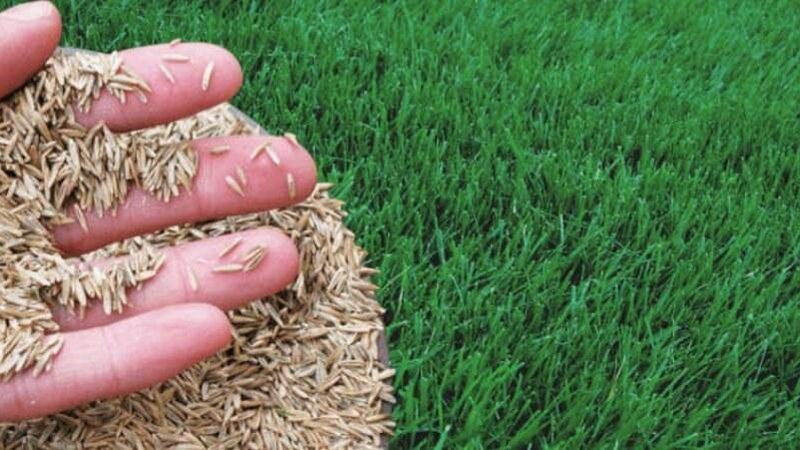
For light to moderate shade where fine fescues have a genuine chance, fall is the time to act. As deciduous trees drop their leaves, canopy cover thins and new seed gets more light during the critical germination window.
Soil temperatures are still warm enough for cool-season grasses to establish, and the cooler weeks ahead favour root development before freeze-up.
Aeration before overseeding makes a significant difference in shaded areas specifically. Soil under tree canopies tends to be compacted and root-dense, with little natural pore space for seed to settle into. Core aeration loosens that soil and creates the seed-to-soil contact that shaded areas rarely have without it.
Green Drop's aeration and overseeding service is timed for fall, when the conditions for shade grass are at their best. We proudly serve across Western Canada, from Calgary, Edmonton, Red Deer, Regina, and Saskatoon to Winnipeg.
If your shaded patches have been an ongoing frustration, this is the season to address them properly, with the right grass, at the right time, in the right soil conditions.